
For many pilgrims, the sight of the Cathedral from Monte do Gozo signifies the end of a long journey—and a quick flight out of Santiago Airport usually follows. However, if you are planning to reach the Cathedral this Spring, your journey home is going to look a little different!
Indeed, from April 23 through May 27, 2026, Santiago’s Rosalía de Castro Airport (SCQ) will fully suspend operations for a major runway renovation. While these upgrades are essential, the five-week closure lands right in the heart of the peak spring camino season.
This closure means your “Path” won’t quite end at the Plaza del Obradoiro this year. You’ll need to plan ahead, pivot your logistics, and perhaps embrace a few more miles of Spanish scenery via train, taxi, or bus.
Here is everything you need to know to keep your pilgrimage on track.
Best Alternatives to Santiago Airport
With Santiago airport being inoperative, you’ll need to redirect your flight to a neighboring city.
We’ve broken these options down into Regional Transfers (airports within Galicia that are close enough for a stress-free taxi or private transfer) and Long-Distance Hubs (perfect for those looking to add a few more miles to their Camino!).
The Closest Alternatives (Best for Taxis & Short Transfers)
- A Coruña Airport (LCG): Only 70 km north of Santiago. It’s the closest option and a popular choice for domestic hops from Madrid or Barcelona. It is also a great option for people starting their Camino from Ferrol, Sarria, O Cebreiro, or Lugo.
Transfer: A taxi takes about 50 minutes (expect to pay roughly €120–€150). Alternatively, frequent trains and Monbus services take about 1 hour. - Vigo Airport (VGO): Located 90 km south of Santiago. This can be a great option for people walking the final 100km along the Camino Portuguese from Tui.
Transfer: A taxi or private transfer takes about 1 hour and 15 minutes (costs vary between €140–€170). Trains from Vigo reach Santiago in under an hour via the high-speed line.

The International Hubs (Best for Trains & Long Distance Buses)
- Porto Airport (OPO): 220 km away in Northern Portugal. This is the favorite for many pilgrims due to the high volume of low-cost international flights. Ideal for Camino Portuguese pilgrims.
Transfer: Take a bus directly to/from Porto airport with Spain’s national operator, Alsa. Approximately a 3.5–4 hour transfer with pricing starting as low as €15 each way. - Madrid–Barajas Airport (MAD): Spain’s massive international gateway and most central location. This makes it an ideal alternative for most Caminos (excluding the Portuguese routes). From here, you can easily access any starting point of the Camino and conveniently return from Santiago as well.
Transfer: Forget the bus—even if you’re on a budget, the high-speed Renfe (AVE/Avlo) train from Madrid-Chamartín is your best bet. It whisks you across the country to/from Santiago in just over 3 hours, making it faster and often more comfortable than a connecting flight.
Our Pro-Travel-Tip for this 2026 Spring Season:
Since thousands of travelers will be diverted to these smaller regional airports simultaneously, pre-booking your private transfer or train tickets is highly recommended. Don’t wait until you land to figure out your seat!
But Wait! There are More Important Travel Changes in Spain for 2026!
While the Santiago airport closure is the biggest logistical hurdle for your camino, there are two major European-wide changes taking full effect in 2026 that every international pilgrim needs to know.
If you are traveling from the U.S., Canada, or the UK, your entry process into Spain is getting a digital makeover this year.
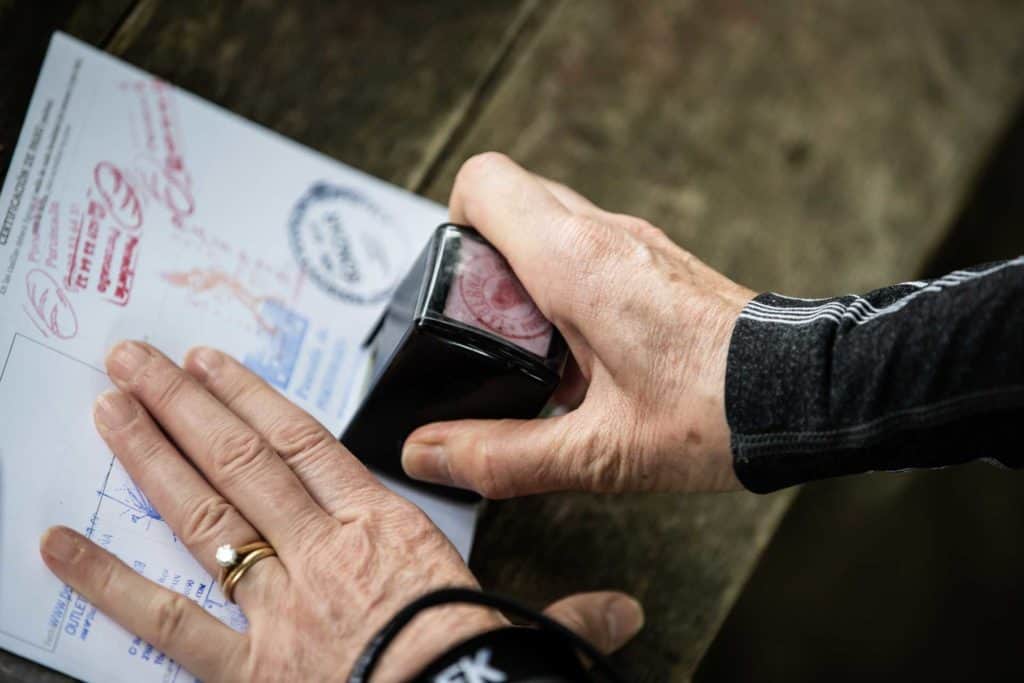
- The Entry/Exit System (EES): No More Passport Stamps. As of April 10, 2026, the EU’s new Entry/Exit System will be fully operational across all borders.
What does that mean? Instead of a physical ink stamp in your passport, your entry and exit will be recorded digitally. The first time you enter Spain (or any EU country) in 2026, border officers will take your fingerprints and a facial scan.
The Goal? This is designed to speed up future border crossings and more accurately track the 90 day maximum stay for tourists. If you plan to stay longer than this, you first need to apply for a visa. For more details and the latest travel advisory’s, visit the Department of State webpage for entry in the EU.
The good news is, you don’t need to take any action or make requests at this time—just enjoy your planning! We are monitoring the rollout closely as well as future ones like the ETIAS and will personally update our travelers the moment more concrete details are announced.
Don’t Let Logistics Block Your Path: Travel Stress-Free with Us!
Planning a pilgrimage is a spiritual and physical undertaking—it shouldn’t be a bureaucratic headache. If the thought of rerouting flights, navigating Spanish train schedules, or managing new EU entry requirements feels overwhelming, let us handle the heavy lifting.
Whether you choose one of our Guided Camino Tours or a Self-Guided Adventure, we’ve got your back. When you book with us, you aren’t just getting a bed and a map; you’re getting:
- Seamless Transfers: We’ve already adjusted our logistics to account for the Santiago airport closure, ensuring your transport from alternative hubs is smooth and pre-arranged.
- Up-to-Date Expertise: From EES biometric updates to the latest trail conditions, our team monitors every change so you don’t have to.
- 24/7 Support: If you miss a turn or can’t walk any further for the day, our local team is just a phone call away to get you back on track.
All you have to do is lace up your boots and show up. We’ll make sure the only thing you have to focus on is the journey to Santiago.
Buen camino!